HomeEverydayReserveCorporateAboutMusicContact

Songs & Stories

Kansas City Stories.
Songs Made to Mean Something.

Fountain City Snacks creates more than bold popcorn. These songs celebrate Kansas City, preserve hometown memories, tell a few ridiculous stories, and explore the moments that stay with us. Listen to each song, then open the story behind it.

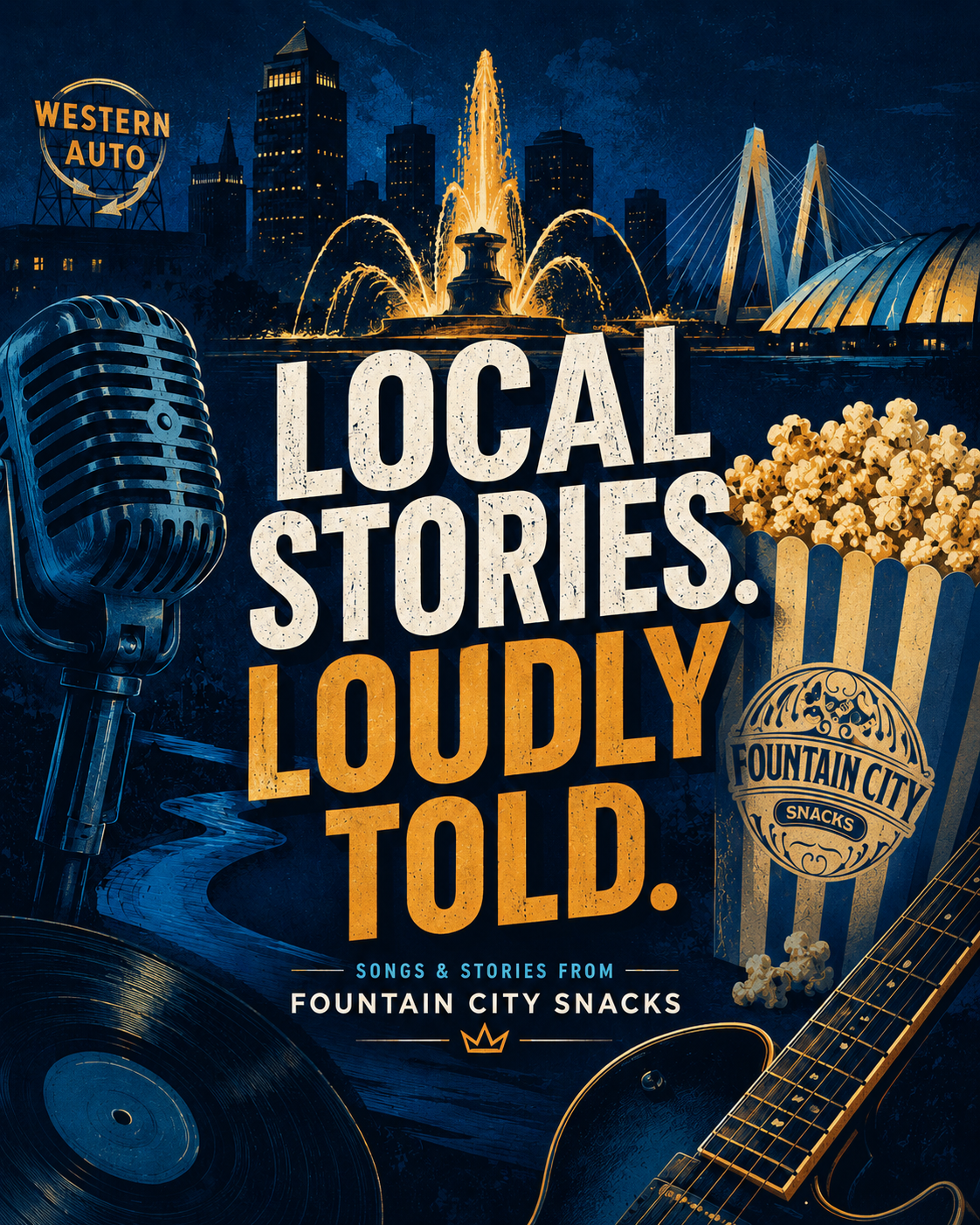
Local Stories Loudly Told artwork for Fountain City Snacks music

The Fountain City Snacks Story

Where the music begins.

Before the tributes, strange nights, and guilty pleasures, there is the true story of the company behind the songs.

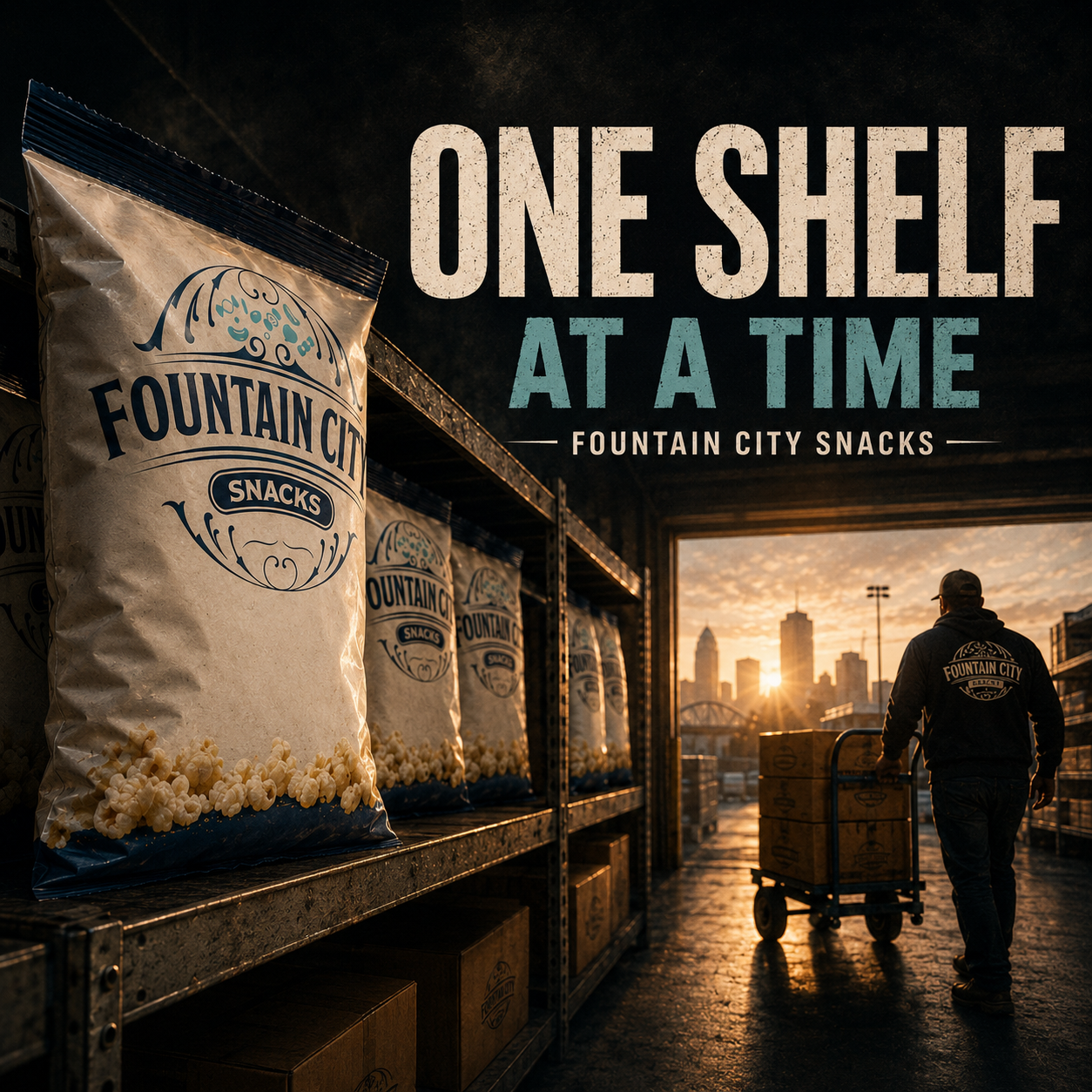
One Shelf at a Time cover art
Defiant Story Rock

One Shelf at a Time

The true story of Fountain City Snacks—from the first routes and closed doors to a devastating warehouse fire, the people who helped us rebuild, and the determination to keep earning our place one shelf at a time.

Read the story behind the song

“One Shelf at a Time” is the Fountain City Snacks story in music. It begins in 2009, when two brothers-in-law started KC Munchies with a pickup truck, a small collection of snack brands, and the belief that a local company could earn its place through hard work and relationships.

The early years meant working full-time jobs, running routes through the night, stocking stores before sunrise, sleeping when possible, and returning the next weekend to do it again. Larger competitors could push smaller distributors around. Banks said no. Recessions changed the rules. The company kept moving.

Then, in 2018, a fire destroyed the warehouse inside the Interstate Underground caves beneath Kansas City. Inventory, equipment, and years of work disappeared. The business survived because other people stepped forward: a distributor offered warehouse space, suppliers extended credit, store owners stayed loyal, and customers continued to believe in us.

The song carries that history forward through the creation of Fountain City Snacks, the move into popcorn production, and the refusal to let setbacks decide how the story ends. It is not a jingle. It is a hard-driving account of what it took to get here.

Every store. Every relationship. Every second chance. One shelf at a time.
Kansas City & Hometown Stories

The places that stay with us.

Some are true memories. Some are fictional stories. All of them are rooted in Kansas City, Olathe, and the local places that inspired them.

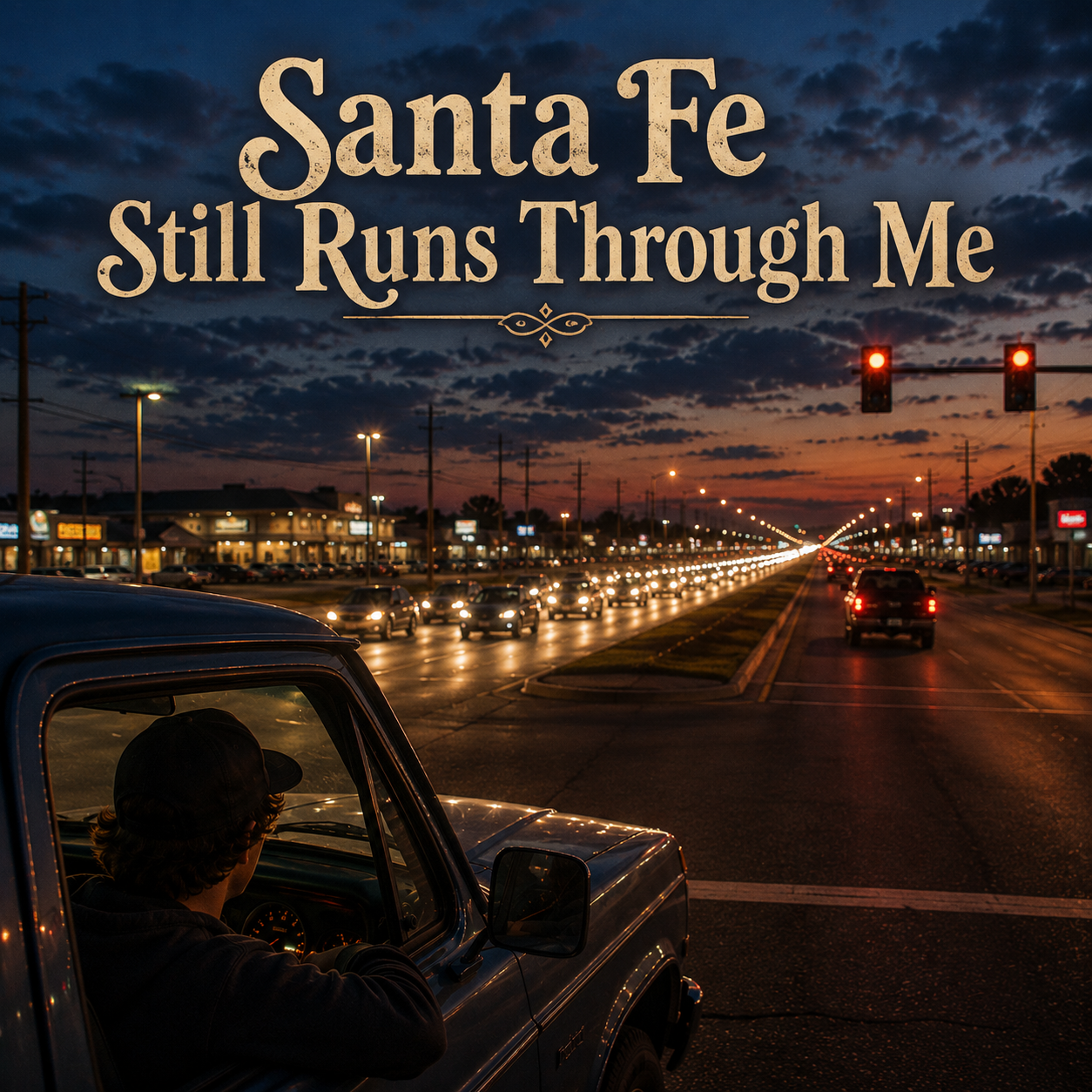
Santa Fe Still Runs Through Me cover art
Heartland Rock · Hometown Story Our Breakout Song

Santa Fe Still Runs Through Me

A hometown song about Olathe, Kansas, and the stretch of Santa Fe Street that once brought generations of the city together every weekend. Through memories of Cruisin’ the Fe, beloved restaurants, teenage mistakes, and places that no longer exist, the song captures an Olathe that has changed—but still lives inside the people who remember it.

Read the story behind the song

“Santa Fe Still Runs Through Me” began with Eric’s personal memories but grew into a song about the Olathe that generations of people still carry with them. It is filled with familiar restaurants, gravel roads, parking-lot conversations, teenage mistakes, and the weekend tradition known simply as Cruisin’ the Fe.

For decades, young people spent weekend nights driving back and forth along Santa Fe Street. They saw friends, showed off their cars, learned where everyone was headed next, and became part of a hometown ritual shared across generations. Santa Fe brought Olathe back together every weekend. Increased enforcement eventually ended the tradition, but not the memories attached to it.

The song includes places longtime residents immediately recognize. Waid’s had a glass jar of thin chocolate-dipped mint sticks beside the register. Mom’s Kitchen is still on Santa Fe, serving generations of customers in a place that seems largely untouched by time. The Mustache Cup is gone, but people still remember tenderloin sandwiches hanging over the edges of the plates.

“Top of the Hill with a case of beer” recalls a field where teenagers once parked their cars and trucks to gather and party. Today, it is the busy intersection of 119th Street and Northgate. Back then, Northgate was still gravel.

The story about being arrested while skipping school is also true. Eric’s close friend called her father—a respected Olathe attorney—and he came to help get Eric out. That friend later died tragically, a devastating loss to those who grew up with her. Her place in the song points to something larger: the Olathe they remember is made not only of places and traditions that are gone, but also of people who are no longer here.

The song is not simply about wishing for high school again. Eric wrote from his own experiences, but listeners began recognizing their own streets, restaurants, friends, and lost traditions within it. It is about how completely a hometown can change while still living inside the people who remember it.

The buildings may disappear. The roads may widen. But Santa Fe still runs through us.

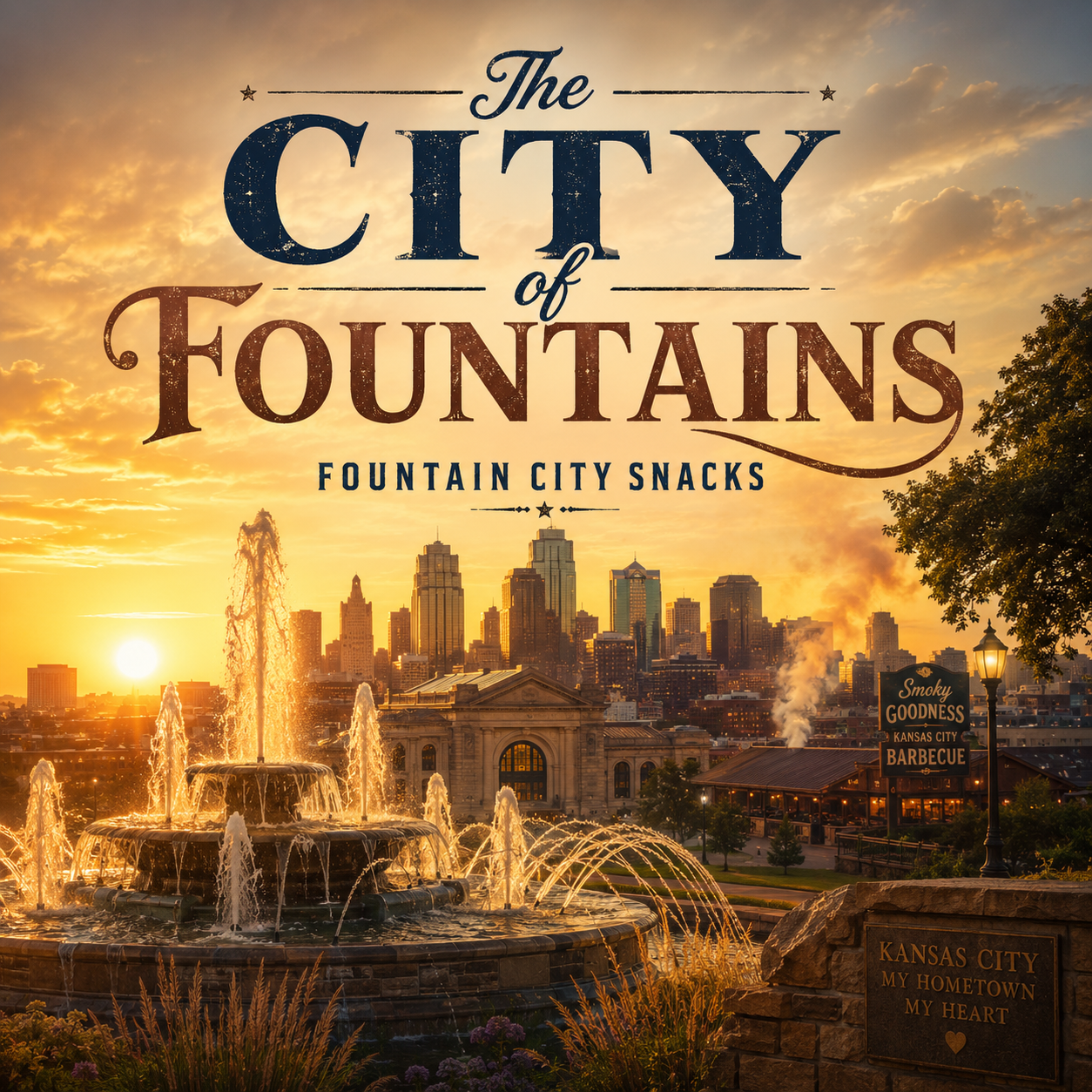
The City of Fountains cover art
Kansas City Country Anthem

The City of Fountains

A tribute to Kansas City and the Midwestern character behind it—the hospitality, hard work, friendliness, local pride, and quiet confidence that make the city feel like home.

Read the story behind the song

“The City of Fountains” was written as a straightforward tribute to Kansas City. It is less about one landmark or one chapter of history than the character of the city as a whole.

The song celebrates a place shaped by hard work without needing to brag about it, friendliness that feels natural rather than performed, and a Midwestern sense of hospitality that can make a large metro feel surprisingly personal.

Fountains provide the symbol, but the people provide the meaning. The song is an anthem for the neighborhoods, traditions, skyline, working families, and local pride that make Kansas City more than a point on a map.

A city known for its fountains—and remembered for the people gathered around them.

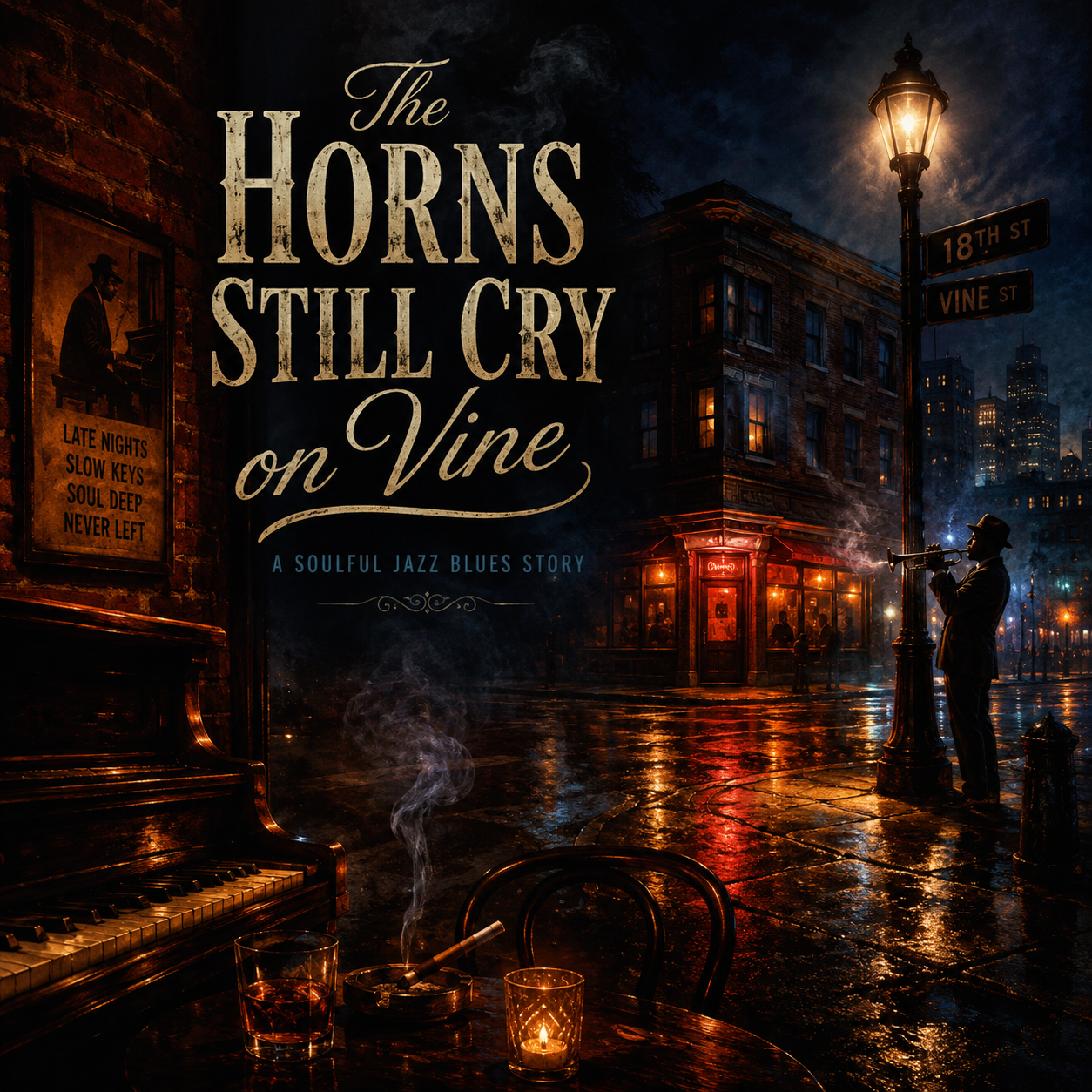
The Horns Still Cry on Vine cover art
Vintage Soul-Blues · Jazz Tribute

The Horns Still Cry on Vine

A tribute to Kansas City’s legendary 18th & Vine Jazz District—the music, memory, struggle, and cultural legacy that still echo through one of the city’s most important neighborhoods.

Read the story behind the song

“The Horns Still Cry on Vine” honors 18th & Vine and the legendary Kansas City jazz tradition. The district is not treated as a museum piece or a chapter that ended. The song imagines the music as something that still lives in the streets, buildings, and memory of the neighborhood.

The horns in the title carry more than melody. They hold celebration and sorrow, brilliance and struggle, crowded rooms and quieter years. They represent the artists and community members who helped create a sound recognized far beyond Kansas City.

The goal was to write a tribute with age in its voice—something soulful enough to respect the history without turning it into a history lesson. It is a song about legacy that can still be heard when the rest of the city becomes quiet.

The rooms have changed. The names have become history. The horns still cry on Vine.

No Ocean Needed cover art
Reggae-Country · Summer Song

No Ocean Needed

A fun, sun-baked song about how brutally hot Kansas City summers can get—and how people here create their own version of island time without a coastline anywhere in sight.

Read the story behind the song

“No Ocean Needed” began with a simple Kansas City truth: it gets unbelievably hot here, and there is no beach waiting at the end of the day.

The song turns that complaint into a celebration. Sprinklers, shade trees, coolers, open garage doors, radios, driveways, and friends who refuse to go home become the local substitute for palm trees and white sand.

Musically, it blends country with reggae and steel-drum energy, giving a Midwestern backyard the feel of a small island vacation. The joke is that Kansas City has none of the scenery normally associated with that sound. The point is that people here make it work anyway.

No coastline. No white sand. No ocean needed.

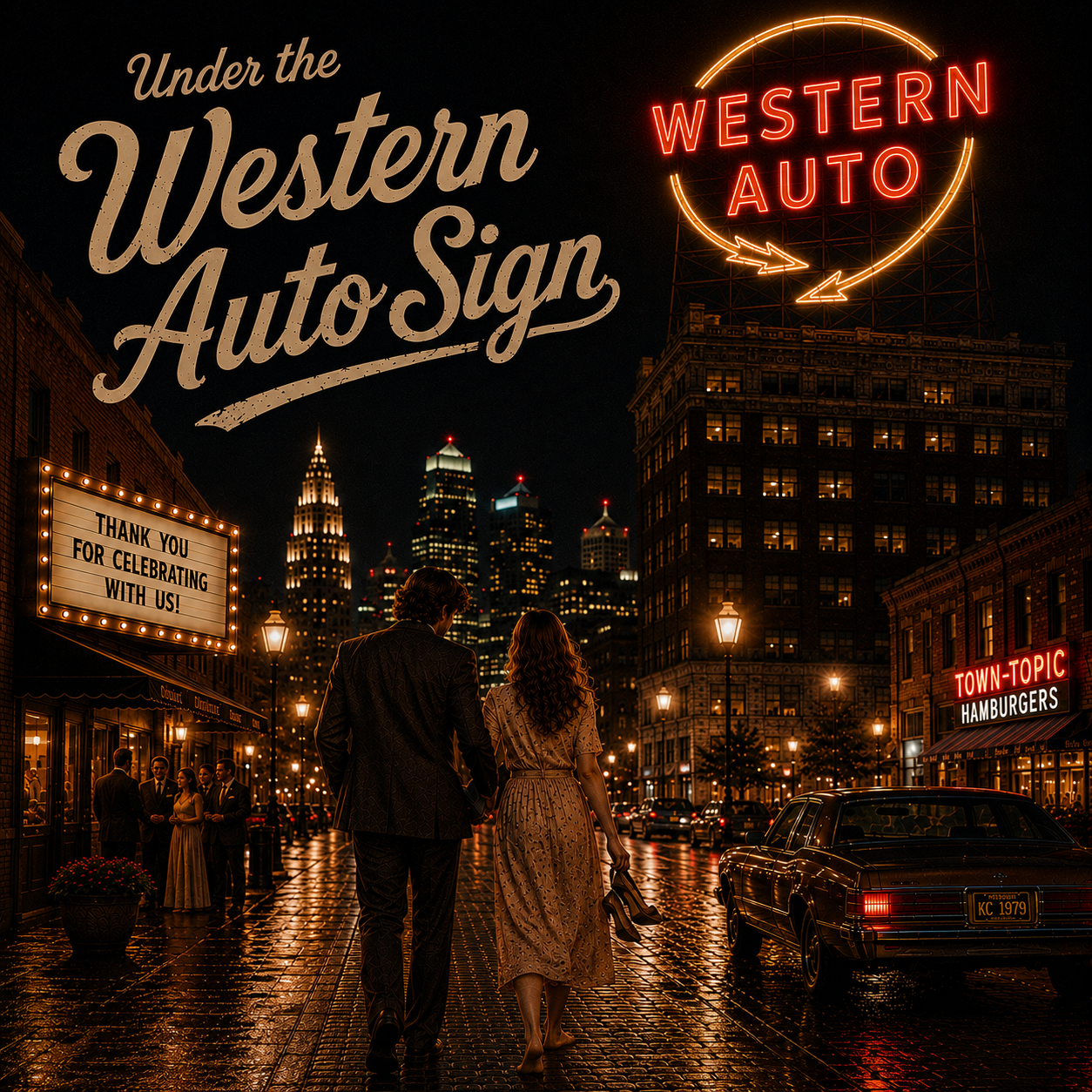
Under the Western Auto Sign cover art
Piano-Led Story Rock

Under the Western Auto Sign

A fictional encounter beneath a Kansas City landmark that slowly reveals itself as something deeper: not a song about missing the girl, but about missing the younger version of yourself who still believed life stretched endlessly ahead.

Read the story behind the song

“Under the Western Auto Sign” is entirely fictional. The landmark came first. The story grew from wanting to place two people beneath one of Kansas City’s most recognizable signs and discover what might have happened there.

In the song, the narrator remembers meeting a woman at a downtown wedding reception roughly forty years earlier. They walk beneath the sign, talk through the night, stop at Town Topic, and then never see each other again.

At first, it sounds like he has carried a lost love for four decades. But the real realization is quieter and more universal. It is not the woman he misses most. He misses the person he was that night—young enough that time did not seem important, with his whole life still ahead and the people he loved still alive.

The woman becomes the doorway into that memory rather than the tragedy at the center of it. The narrator does not reject the life and family he built. He simply recognizes the strange ache of looking backward and understanding how much has passed.

Sometimes the person we miss is the person we used to be.

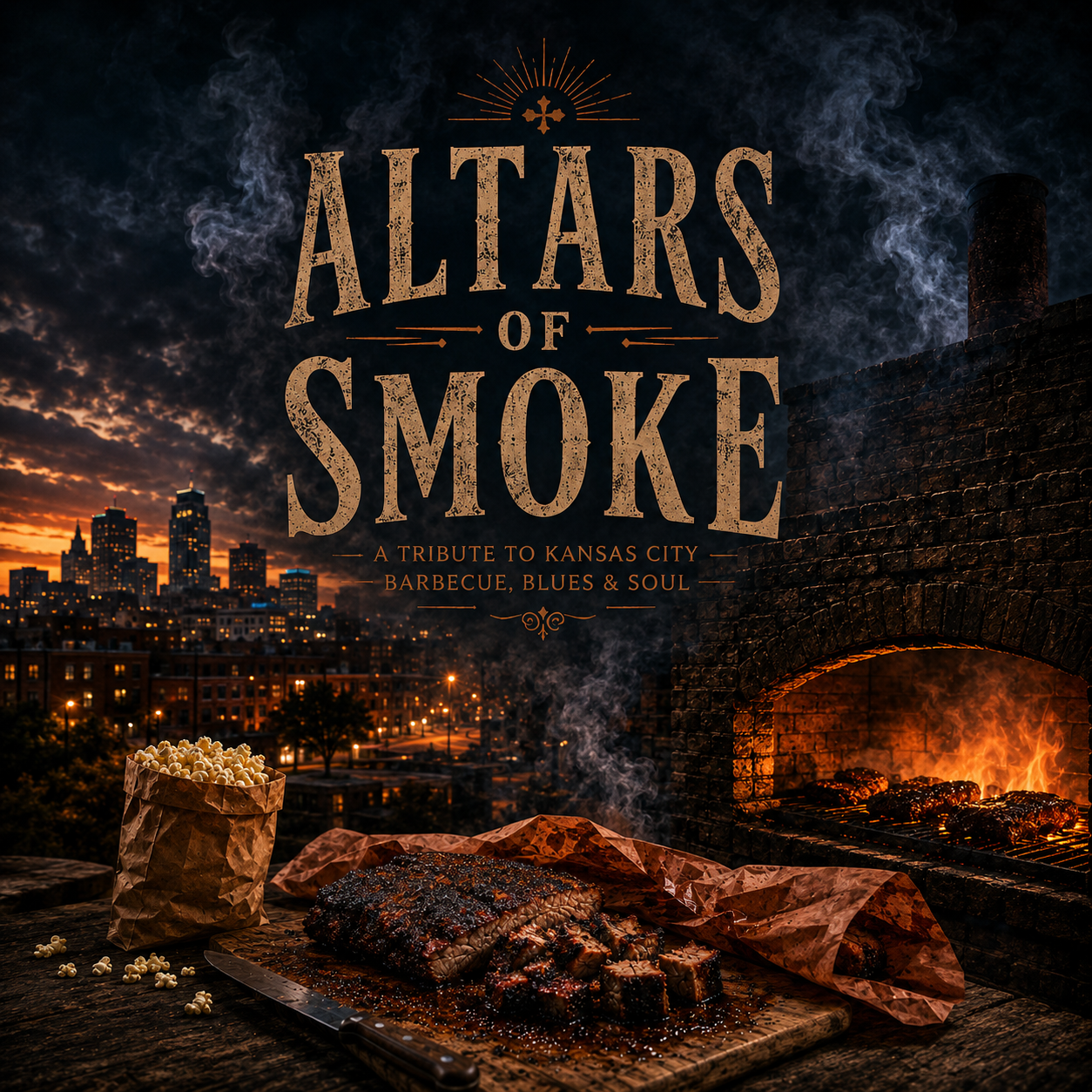
Altars of Smoke cover art
Blues-Rock · Barbecue Tribute

Altars of Smoke

A tribute to Kansas City barbecue—its history, its smoke-filled traditions, and the pitmasters and communities who built the city’s reputation as the greatest barbecue town on Earth.

Read the story behind the song

“Altars of Smoke” treats Kansas City barbecue with the reverence normally reserved for sacred places. The pits become altars, the smoke becomes a signal, and the people tending the fires become keepers of a tradition larger than any single restaurant.

The song is a tribute to the history behind Kansas City’s barbecue identity and to those who paved the way—people who built reputations through patience, craft, consistency, and food that brought neighborhoods together.

It celebrates the famous reputation, but it is really about the work underneath it: long hours, guarded techniques, generations of knowledge, and the belief that smoke, fire, and time can turn a simple meal into part of a city’s identity.

The names may change. The fires keep burning.

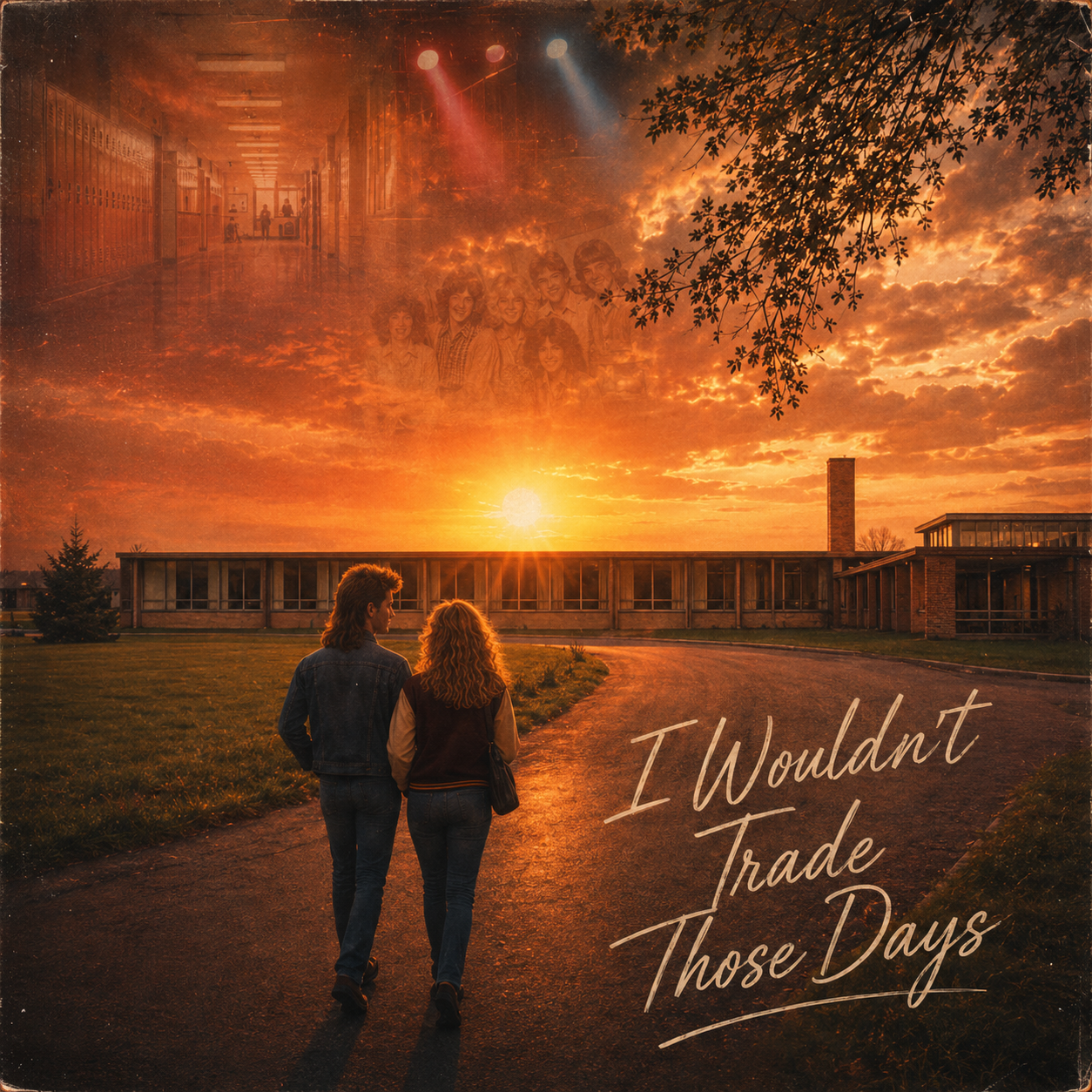
I Wouldn’t Trade Those Days cover art
Nostalgic Country Rock

I Wouldn’t Trade Those Days

A deeply personal look back at high school, hometown friendships, and the Class of ’86— not because every moment was perfect, but because those imperfect years became part of who we are.

Read the story behind the song

“I Wouldn’t Trade Those Days” is one of the most personal songs in the collection. It looks back at Eric’s high-school years, the hometown where those memories were made, and the people who shared them.

The song includes a direct salute to the Class of 1986, but it is not meant to claim that adolescence was easier or better in every way. Memory has rough edges. Friends change, places disappear, and moments that felt ordinary at the time gain meaning only years later.

The title carries the real message. The years were imperfect, sometimes reckless, and impossible to repeat. Even so, they helped shape everything that followed—and he would not trade them.

Not perfect. Not forgotten. Not something he would trade.

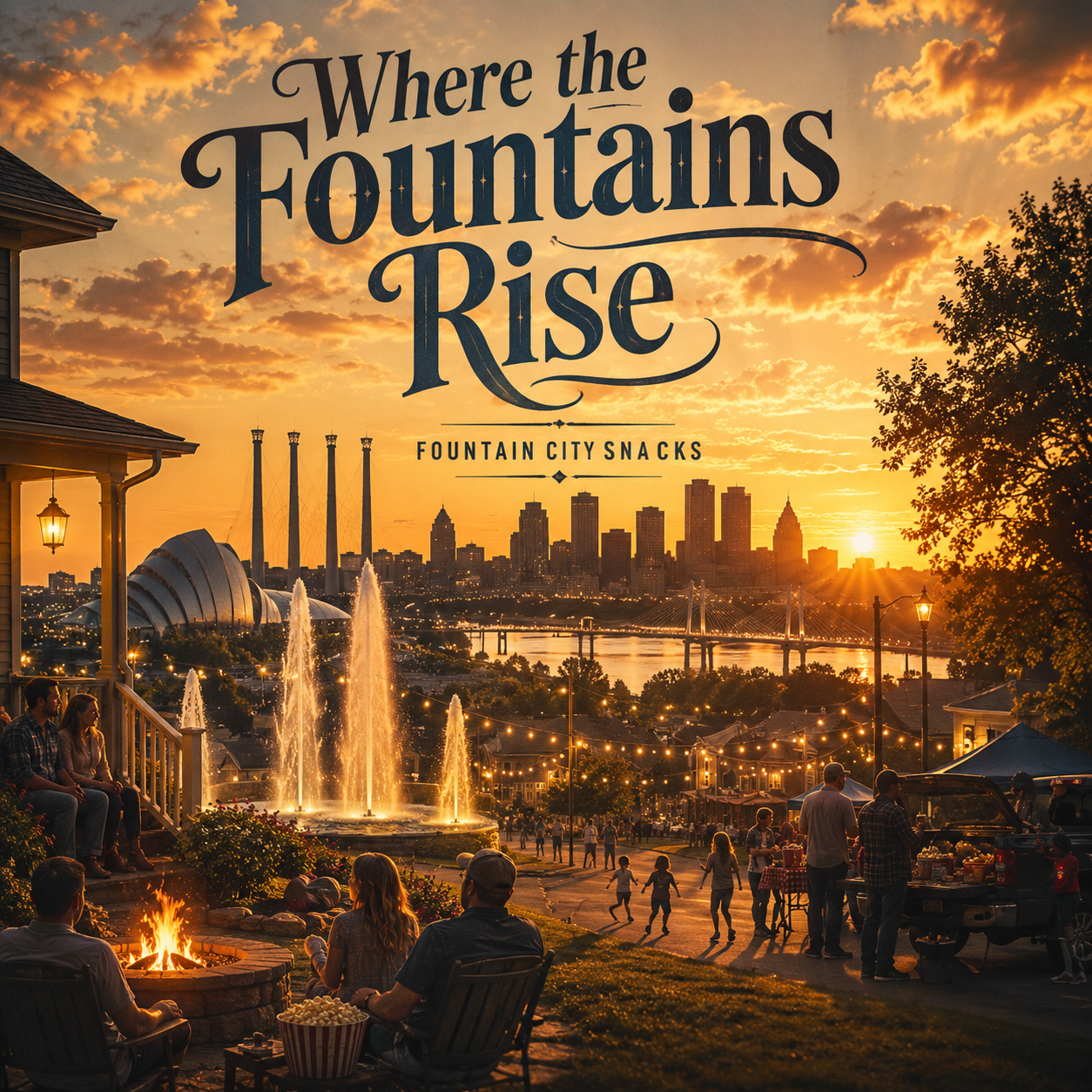
Where the Fountains Rise cover art
Kansas City Anthem

Where the Fountains Rise

Another love letter to Kansas City—an anthem built around the landmarks, pride, resilience, and sense of belonging that make people carry the city with them wherever they go.

Read the story behind the song

“Where the Fountains Rise” is another tribute to Kansas City, but it approaches the city as a place people carry with them.

The fountains are both literal landmarks and a symbol of belonging. They represent the neighborhoods, history, sports, music, food, work, and shared identity that connect people across the metro.

The song was written for the feeling of seeing Kansas City from a distance and still knowing where home is—for the people who stayed, the people who left, and the people who continue to recognize themselves in the city.

Wherever the road leads, home is where the fountains rise.

Every song has a story.
Every story starts somewhere.

Some begin with Kansas City history. Some begin with a hometown memory. Some begin with a bag of popcorn and an idea that became far more dramatic than it had any right to be.

Keep listening. We are still writing.